For many female founders, the journey from a passionate solopreneur to a scaling CEO is exhilarating—but it’s often paved with spreadsheets that don’t quite tell the whole story. You know your product, you know your mission, and you’ve mastered the art of the hustle. But as your revenue climbs, so does the complexity of your financial landscape.
This is where the traditional bookkeeper model often falls short, and where Fractional CFO services become the catalyst for sustainable growth.
If you are a female entrepreneur in the United States looking to move beyond “surviving tax season” to strategizing for a seven-figure exit, here is everything you need to know about integrating high-level financial strategy into your business.
What Exactly is a Fractional CFO?
Unlike a full-time Chief Financial Officer who commands a six-figure executive salary (plus equity and benefits), a Fractional CFO provides the same executive-level expertise on a part-time or project basis. They don’t just record past financial data; they chart your future financial roadmap to maximize profit margins.
While a bookkeeper focuses on data entry and a CPA focuses on tax compliance, a Fractional CFO focuses on strategy, cash flow forecasting, and scaling.
The Intersection of High-Level Bookkeeping and Business Strategy
Many entrepreneurs confuse clean accounting books with true financial health. Having organized receipts is foundational, but it is not strategy. Fractional CFO services bridge the gap between daily bank transactions and long-term enterprise value.
Predictive Cash Flow Forecasting: Most small business owners check bank balances to make hiring decisions. A Fractional CFO builds dynamic models using standard cash flow management strategies to predict capital availability months in advance.
Profit Margin Optimization: High revenue means little without net profitability. CFOs conduct utilization audits to eliminate margin leakage and ensure high-margin tasks take priority.
Strategic Tax Planning: While your CPA handles annual filings, a Fractional CFO works year-round to structure business distributions, capital investments, and asset purchases according to official IRS S-Corporation tax guidelines.
Why Female Founders Benefit from Fractional Financial Support
Fundraising & Investor Readiness: Preparing for angel investors or Series A capital requires institutional-grade pitch decks. A Fractional CFO structures your financial records to pass rigorous investor financial due diligence.
Data-Backed Risk Management: Female founders often display strong risk awareness. Dedicated financial modeling turns ambiguous decisions—like entering a new regional US market—into calculated growth risks.
Operational Time Recovery: Delegating financial architecture, financial controls, and automated software integration frees up vital CEO operational hours.
Key Indicators You Need a Fractional CFO
Annual gross revenue crosses the $250,000 to $500,000 threshold.
Top-line revenue is strong, but cash balances stay surprisingly tight.
You are planning a major business pivot, product line launch, or acquisition within 12 months.
You lack clear visibility into your P&L (Profit and Loss) and balance sheet metrics.
How to Choose the Right Fractional Partner
When selecting financial advisory services in the US commercial market, focus on three core criteria:
Vertical Expertise: An e-commerce CFO evaluates inventory velocity, whereas a SaaS or agency CFO focuses on customer acquisition cost (CAC) and monthly recurring revenue (MRR).
Modern Tech Stack Mastery: Ensure your fractional advisory firm integrates platforms like QuickBooks Online, Gusto, Xero, and Fathom.
Actionable Communication: Select a strategist who translates complex metrics into direct corporate decisions without hiding behind financial jargon.
Final Thoughts: Investing in Your Vision
Fractional CFO services represent a strategic investment rather than a standard operational expense. Transitioning your focus from basic expense tracking to proactive cash flow planning builds enterprise value and positions your company for long-term equity growth.
Frequently Asked Questions
1. How does a Fractional CFO differ from a regular bookkeeper?
A bookkeeper is backward-looking, focusing on recording historical financial transactions and keeping accounts balanced. A Fractional CFO is forward-looking, utilizing existing financial data to create growth strategies, runway models, and predictive cash flow forecasts.
2. When should a female entrepreneur hire a Fractional CFO?
Most growing businesses bring in fractional support when annual revenue reaches $250,000 to $500,000, or when preparing for major events like capital raises, debt financing, or team expansions.
3. Will a Fractional CFO replace my CPA?
No. Your CPA handles tax return preparation and annual compliance. Your Fractional CFO focuses on internal growth strategies, unit economics, and cash allocation, working collaboratively with your CPA to optimize overall corporate tax efficiency.
4. How much do Fractional CFO services cost?
Because services are fractional, businesses save 60% to 80% compared to full-time executive salaries. Engagements generally operate on monthly retainers tailored to business size and reporting complexity.
5. Can a Fractional CFO assist with fundraising and pitch decks?
Yes. Fractional CFOs build investor-grade financial models, clarify financial burn rate metrics, determine capital runway, and help justify valuation terms to angel groups and venture capital firms.
6. What financial software platforms do Fractional CFOs use?
Modern US advisory firms typically rely on cloud ecosystems including QuickBooks Online or Xero for accounting, Gusto for payroll, and Fathom or LivePlan for analytics and strategic forecasting.
Professional Disclaimer: The content on this page regarding Fractional CFO services and business strategy is intended for general informational purposes only. It does not constitute professional financial, tax, or legal advice. Because every business is unique and laws in the United States change frequently, you should always consult with a licensed professional (CPA or Financial Advisor) regarding your specific business situation. WomenSteps.com and its authors are not liable for any financial decisions made based on this content.
Hemoglobin (Hb) is a crucial, iron-rich protein found inside your red blood cells. Its primary job is to pick up oxygen in your lungs, transport it to every organ and tissue throughout your body, and carry carbon dioxide back to the lungs so it can be exhaled.
For women, regularly checking hemoglobin levels as part of a Complete Blood Count (CBC) is essential. Women are statistically more susceptible to iron deficiency and anemia due to monthly blood loss during menstruation and the heightened physiological demands of pregnancy.
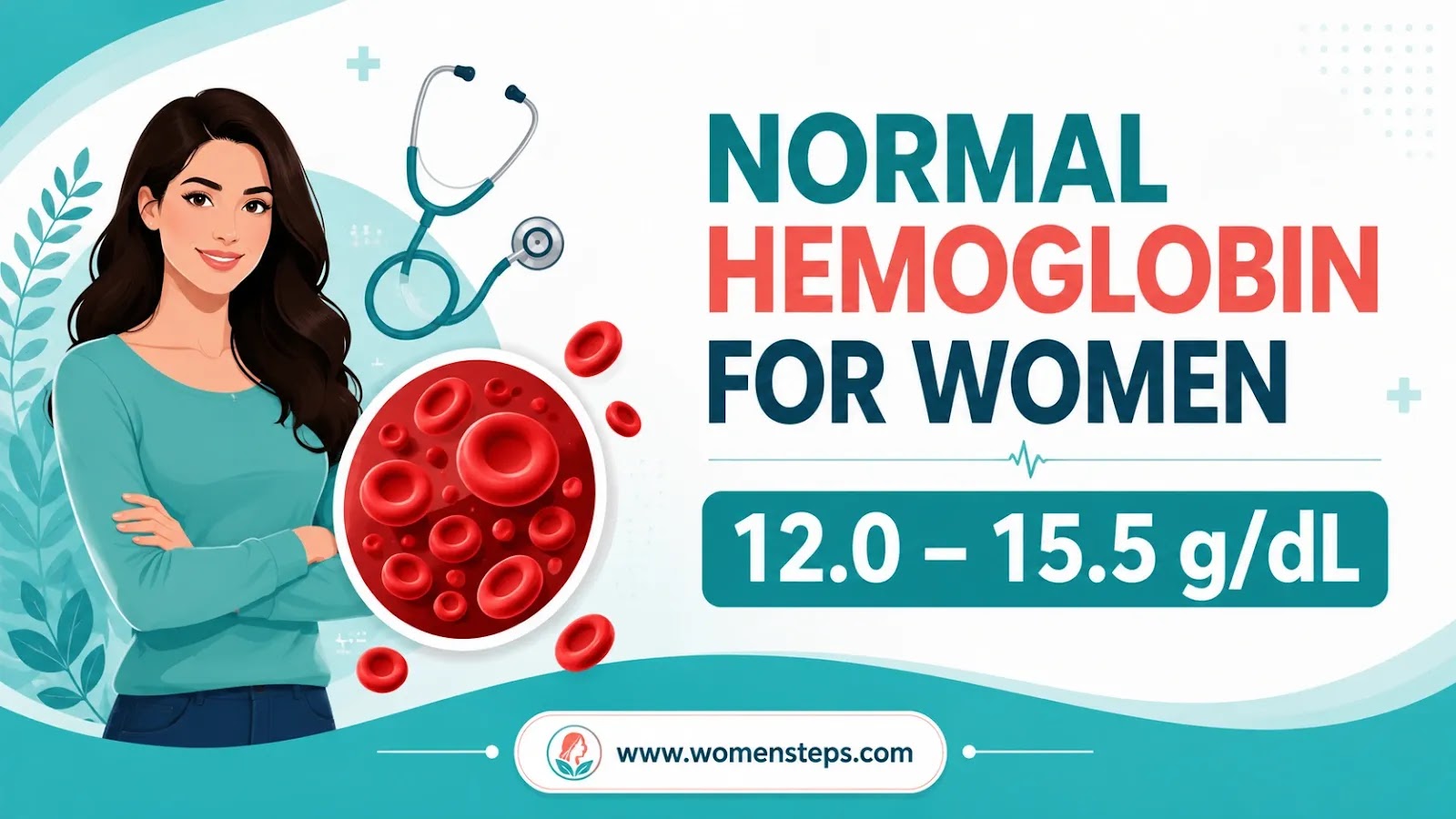
Reference guide for normal female hemoglobin levels (12.0–15.5 g/dL).
What is a Normal Hemoglobin Level for Women?
In medical diagnostic testing, hemoglobin concentration is measured in grams per deciliter (g/dL). Standard reference ranges established by major healthcare institutions include:
Adult Women (Non-pregnant): 12.0 to 15.5 g/dL
During Pregnancy: Above 11.0 g/dL
Post-Menopausal Women: 11.7 to 13.8 g/dL (Lab-specific variations may apply)
Hemoglobin & Blood Health Overview
Category
Reference Range
Unit of Measurement
Adult Women
12.0 – 15.5
g/dL
Pregnant Women
> 11.0
g/dL
Post-Menopause
11.7 – 13.8
g/dL
Hemoglobin A1c (Normal Target)
Below 5.7%
%
Why Do These Levels Vary?
Menstruation: Regular monthly menstrual bleeding consumes systemic iron reserves, frequently leading to lower baseline hemoglobin levels compared to men.
Pregnancy: Plasma volume expands significantly to nourish a growing baby, diluting the concentration of red blood cells in the bloodstream.
Altitude: Living at higher elevations where atmospheric oxygen is lower prompts the body to produce extra red blood cells and hemoglobin to compensate.
Hemoglobin vs. HbA1c: Understanding the Difference
Key differences: Oxygen transport (Hemoglobin) vs. Blood sugar control (HbA1c).
It is common to confuse standard Hemoglobin (Hb) with HbA1c, but they measure completely different aspects of your health:
HbA1c (Glycated Hemoglobin): Evaluates the percentage of red blood cells coated in sugar over the past 2 to 3 months. This is used to screen for diabetes or prediabetes.
Standard HbA1c Ranges:
Normal: Below 5.7%
Prediabetes: 5.7% to 6.4%
Diabetes: 6.5% or higher
Symptoms of Abnormal Hemoglobin Levels
Recognizing common clinical signs of low hemoglobin levels.
When your levels fall outside the target window of 12.0 – 15.5 g/dL, your body will usually send warning signals.
Low Hemoglobin (Anemia)
Chronic fatigue, weakness, and low energy
Pale or yellowish skin and brittle nails
Shortness of breath during basic daily activities
Unusually cold hands and feet
High Hemoglobin (Polycythemia)
Frequent lightheadedness or dizziness
Itchy skin, especially following a warm bath or shower
Frequent headaches or localized joint discomfort
How to Maintain Healthy Hemoglobin Levels
Incorporate heme and non-heme iron sources paired with Vitamin C to boost absorption.
1. Optimize Your Iron & Vitamin Intake
Combine Heme iron (found in lean meats, poultry, and seafood) with Non-Heme iron (found in beans, spinach, lentils, and fortified cereals). Always pair plant-based iron sources with Vitamin C (citrus fruits, bell peppers, tomatoes) to maximize absorption.
2. Avoid Unsupervised Restrictive Diets
Crash diets or severe calorie restrictions can lead to sudden nutrient deficiencies. Work with a physician or nutritionist before removing entire food groups from your diet.
3. Maintain Regular Physical Activity
Moderate cardio and aerobic exercise stimulate oxygen demand across your body, encouraging the bone marrow to produce healthy new red blood cells.
When to See a Doctor
While lifestyle choices play a massive role, abnormal readings can sometimes indicate underlying medical conditions—such as kidney disease, bone marrow issues, or hidden gastrointestinal bleeding. Always discuss your blood test results with your doctor.
Critical Medical Alert
A hemoglobin reading below 6.5 to 7.0 g/dL is considered dangerously low and requires immediate clinical intervention or emergency care. Seek urgent medical help if you experience severe shortness of breath, chest pain, or sudden fainting.
Frequently Asked Questions (FAQ)
1. What is a dangerously low hemoglobin level for a woman?
While normal levels hover between 12.0 and 15.5 g/dL, readings that drop below 6.5 to 7.0 g/dL are considered life-threatening medical emergencies that frequently require hospital treatment or blood transfusions.
2. Can dehydration artificially alter hemoglobin results?
Yes. Dehydration reduces the liquid plasma portion of your blood, causing red blood cells to appear artificially concentrated on lab reports. Returning to proper hydration typically restores baseline figures.
3. How fast can diet or iron supplements raise hemoglobin?
With consistent iron intake or doctor-prescribed supplements, initial improvements are usually seen within 2 to 4 weeks. However, rebuilding your body’s deep tissue iron stores completely can take 3 to 6 months.
4. Is an HbA1c test the same as a daily glucose test?
No. A daily blood glucose test measures your blood sugar at a single snapshot in time. An HbA1c test looks at glycated hemoglobin to establish an average blood sugar control level over a 90-day window.
5. Why do hemoglobin levels change after age 50 in women?
Following menopause, monthly menstrual blood loss ceases, but age-related shifts in bone marrow production and hormonal changes can lead to slight baseline changes. Any significant drop should be thoroughly evaluated by a physician.
When American financial advisors discuss tax-advantaged retirement planning, traditional 401(k) employer plans
and Roth IRAs
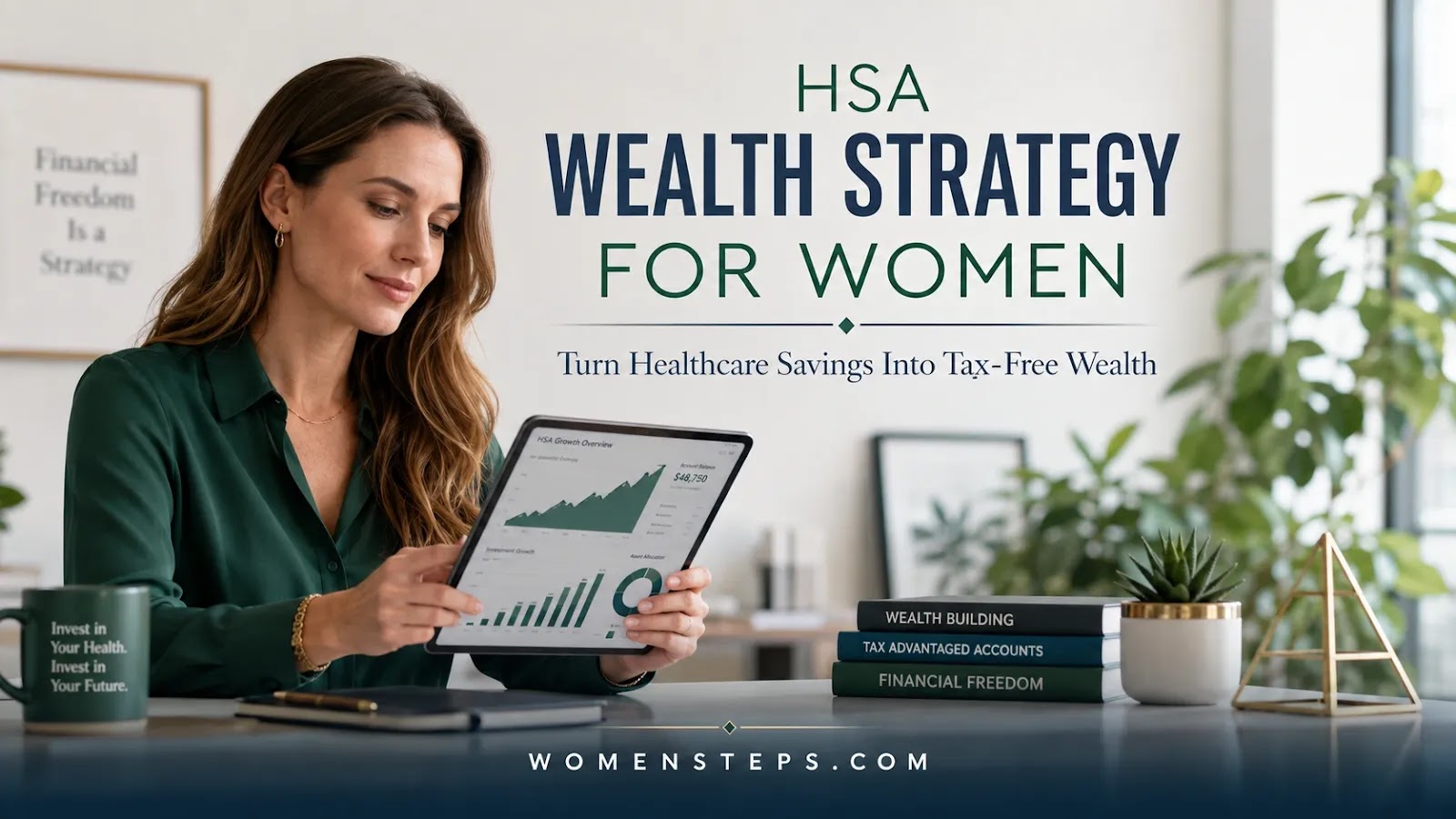
almost always dominate the conversation. However, tucked away within the United States tax code lies an asset class that provides structural financial advantages superior to both: the Health Savings Account (HSA).
Originally created by Congress under the Medicare Prescription Drug, Improvement, and Modernization Act of 2003, the HSA was designed as a simple vehicle to help working Americans manage out-of-pocket medical bills under High-Deductible Health Plans (HDHPs). Over two decades later, sophisticated financial strategists treat the HSA not as a spending account, but as a long-term stealth wealth-building vault.
For American women—who navigate a complex financial landscape shaped by statistical longevity, the persistent gender wage gap, career pauses for caregiving, and elevated lifetime healthcare costs—mastering the Health Savings Account is no longer optional. It is one of the most effective levers available to secure financial independence and build generational wealth.
1. Understanding the Gender Healthcare Gap
To understand why the Health Savings Account is a game-changing asset for women, one must first look at the unique structural realities governing female longevity and healthcare economics in the United States.
A. The Longevity Factor
According to demographic data from the Centers for Disease Control and Prevention (CDC), American women live an average of 5.9 years longer than American men. While living longer is a blessing, it introduces a severe financial burden: retirement assets must stretch across a significantly longer time horizon. A longer lifespan directly translates into more years of required housing, daily living expenses, and ongoing healthcare support.
B. The Lifetime Healthcare Cost Disparity
Because women live longer and are more likely to spend their final years living independently without a surviving spouse, their lifetime healthcare expenses outpace those of men. Independent research from the Employee Benefit Research Institute (EBRI) estimates that a 65-year-old woman retiring today will need approximately $165,000 to $190,000 strictly to cover healthcare costs in retirement. This calculation excludes long-term nursing home care, which can add tens of thousands of dollars per year in out-of-pocket fees.
C. Frequent Interruption of Compounding Interest
Women are far more likely than men to take temporary leaves from the workforce to care for young children or aging family members. These career pauses interrupt continuous workplace retirement contributions (such as 401k employer matches). An HSA allows women during their high-earning working years to shelter capital in an account that compounds tax-free indefinitely, helping offset periods of lower income.
2. The Mechanics: The Only Triple Tax Advantage in the U.S. Code
Most tax-advantaged accounts in the United States offer a single or double tax benefit. For example, a Traditional IRA provides an upfront income tax deduction, but you must pay ordinary income tax on every dollar withdrawn during retirement. Conversely, a Roth IRA uses after-tax dollars today, offering tax-free growth and tax-free withdrawals later in life.
The Health Savings Account is unique because it is the only investment vehicle in the United States tax code that offers a Triple Tax Advantage:
The HSA Triple Tax Benefit Architecture:
1. Tax-Deductible Contributions (Pre-Tax Dollars): Every dollar contributed reduces your gross adjusted income (AGI) dollar-for-dollar in the current tax year, lowering your overall federal and state tax liability.
2. Tax-Deferred Investment Growth: Dividends, interest payments, and capital gains generated inside the account accumulate completely exempt from federal and state capital gains taxes.
3. Tax-Free Withdrawals for Medical Expenses: When funds are pulled out to pay for qualified medical care, zero taxes are assessed. You pay no income tax, no capital gains tax, and no penalty fees.
The Hidden Bonus: Exemption from FICA Taxes
Beyond the primary triple tax shelter, there is a powerful fourth benefit that many account holders overlook. When you fund your HSA via automatic pre-tax payroll deductions through your employer, your contributions bypass the 7.65% Federal Insurance Contributions Act (FICA) tax (5.9% for Social Security and 1.45% for Medicare).
Standard 401(k) and 403(b) retirement contributions are subject to FICA taxes. By funding an HSA through payroll deductions, an employee earning $80,000 who contributes the maximum individual limit saves an immediate 7.65% in payroll taxes on top of their standard federal and state income tax savings.
3. HSA Contribution Rules and IRS Thresholds
To participate in a Health Savings Account, the IRS requires enrollment in a qualified High-Deductible Health Plan (HDHP). For a health insurance policy to meet HDHP standards, it must satisfy specific annual deductible and out-of-pocket maximum criteria set by the federal government.
IRS Metric & Limit Category
Individual Coverage
Family Coverage
Minimum Policy Deductible
$1,650
$3,300
Maximum Out-of-Pocket Limit
$8,300
$16,600
Maximum Contribution Limit
$4,300
$8,550
Age 55+ Catch-Up Contribution
+$1,000 additional
+$1,000 additional per spouse
Note: If both spouses are age 55 or older, each spouse must maintain their own individual HSA account to claim their respective $1,000 catch-up contribution.
4. HSA vs. FSA vs. 401(k) vs. Roth IRA: The Ultimate Comparison
Choosing where to allocate your hard-earned financial surplus requires understanding how these common wealth-building accounts stack up against one another.
Account Type
Tax Benefit Type
Rollover Rules
Investment Options
FICA Tax Exempt?
Health Savings Account (HSA)
Triple Tax Advantage
100% Rollover Forever
Stocks, ETFs, Mutual Funds
YES (via payroll)
Flexible Spending Account (FSA)
Single Tax Advantage
“Use-it-or-lose-it” (Annual forfeit)
None (Cash default)
YES
Traditional 401(k)
Tax-Deferred (Taxed at exit)
100% Rollover (Job change)
Employer selected funds
NO
Roth IRA
Post-Tax (Tax-Free exit)
100% Rollover Forever
Full Market Access
NO
5. Executing the “Stealth IRA” Strategy: The Delayed Reimbursement Protocol
The fundamental mistake made by 90% of American HSA holders is treating the account like a traditional checking account: depositing money pre-tax, pulling out the debit card at the pharmacy counter, and spending the balance immediately on current medical costs.
While this approach saves money on taxes today, it destroys the long-term compounding potential of your capital. To build wealth, elite financial practitioners execute the Delayed Reimbursement Protocol (also known as the Stealth IRA model).
Visualizing the Delayed Reimbursement Protocol for multi-decade compounding.
How the Delayed Reimbursement Protocol Works:
Enroll in an HDHP and Max Out Your HSA: Contribute the maximum allowed IRS limit into your HSA via employer payroll deductions.
Invest 100% of Surplus Funds: Transfer cash reserves above your plan’s holding minimum (usually $1,000) into broad-market equity index funds, such as an S&P 500 index fund or Total Stock Market index fund.
Pay Current Medical Out-of-Pocket Expenses: When you pay for doctor visits, prescription drugs, dental work, or vision care today, do not touch your HSA funds. Pay for these bills using standard cash flow or credit cards that earn cash-back rewards.
Digitize and Archive Every Receipt: Scan every medical invoice, store digital PDFs in a secure cloud folder (e.g., Google Drive), and log the expenses in a spreadsheet.
Let Capital Compound Un-taxed for Decades: Allow your invested HSA balance to grow for 10, 20, or 30 years without liquidation.
Reimburse Yourself Tax-Free in Retirement: Under current IRS Tax Code Section 223, there is no statutory deadline for self-reimbursement. You can redeem qualified receipts incurred in 2026 during the year 2046 or 2056 completely tax-free to purchase retirement property, fund lifestyle expenses, or cover travel.
Case Study: The Math Behind the Strategy
Consider Sarah, a 30-year-old corporate executive in Chicago earning $95,000 annually. She enrolls in an HDHP and maxes out her individual HSA contribution ($4,300/year) for 25 years.
Instead of spending her HSA balance on current medical bills, Sarah pays her $1,200 annual out-of-pocket health costs using cash. She invests her HSA balance into an S&P 500 index fund yielding an average total return of 8% per year.
Total Out-of-Pocket Cash Spent: $30,000 over 25 years.
Total HSA Capital Invested: $107,500.
HSA Account Balance at Age 55:~$314,000.
Accumulated Tax-Free Receipts Retained: $30,000.
At age 55, Sarah can withdraw $30,000 tax-free immediately against her historical receipts to use for any purpose, while leaving over $284,000 untouched to continue compounding until retirement.
6. Over 30 Everyday HSA Expenses Women Frequently Miss
Many women underutilize their HSA assets because they believe qualified expenses are limited strictly to hospital stays and doctor co-pays. The IRS permits tax-free withdrawals across an expansive array of health, wellness, maternal, and preventative products:
Breast pumps, storage bags, and lactation consulting fees
Doula and midwife care services
Pregnancy test kits and ovulation monitors
Over-the-counter menstrual care products (pads, tampons, cups)
B. Vision, Dental & Body Wellness
Prescription eyeglasses, sunglasses, and contact lenses
LASIK eye surgery and corneal refractive procedures
Dental cleanings, fillings, crowns, root canals, and braces
Night guards for teeth grinding and orthodontic aligners
Prescription acne treatments and dermatological care
Sunscreen with SPF 15+ protection rating
C. Mental Health & Specialized Care
Therapy sessions with licensed psychologists or social workers
Psychiatric evaluations and specialized mental health coaching
Acupuncture treatments and licensed chiropractic adjustments
Physical therapy sessions following injuries or childbirth
Weight loss programs prescribed by a doctor to treat diagnosed obesity
Specialized medical equipment, blood pressure monitors, and pulse oximeters
7. Rules Governing HSAs After Age 65
When an HSA holder turns 65, the account undergoes a fundamental regulatory shift, effectively turning into a hybrid health account and traditional retirement account.
HSA Functionality at Age 65+:
Withdrawals for Qualified Healthcare: Remain 100% Tax-Free. You can use these funds tax-free to pay for Medicare Part B, Part D, and Medicare Advantage premiums (though not Medigap/Medicare Supplement premiums).
Withdrawals for Non-Medical Expenses: The harsh pre-65 20% IRS penalty fee disappears completely. If you withdraw money for non-medical reasons (such as living expenses, real estate, or general leisure), the money is simply taxed as ordinary income—making it function identically to a traditional 401(k) or traditional IRA.
8. Common HSA Pitfalls and Tax Mistakes to Avoid
To ensure your HSA remains compliant and penalty-free, be mindful of these common operational landmines:
Critical Tax Pitfalls to Avoid:
1. The California and New Jersey State Income Tax Exception: While the federal government and 48 states honor the tax-free status of HSA contributions and investment earnings, California and New Jersey do not. Residents in CA and NJ must report dividends, interest, and realized capital gains from their HSA on state tax returns.
2. Excess Contribution Penalties: Exceeding annual IRS contribution limits incurs a 6% tax penalty on the excess amount every year until corrected. Monitor employer contributions closely if your company offers an HSA wellness match.
3. Poor Receipt Archiving: If the IRS audits your tax return, you must produce itemized receipts proving that withdrawals matched qualified medical expenses. Cancelled check stubs or simple credit card statements are insufficient; retain itemized vendor invoices.
4. Non-Qualified Withdrawals Prior to Age 65: Using HSA funds for non-medical spending before age 65 triggers standard income tax plus a severe 20% federal penalty fee.
9. 4-Step Action Plan to Implement Today
Your Step-by-Step HSA Execution Checklist:
1
Confirm Plan Eligibility: During your company’s next open enrollment window, evaluate whether switching to an HSA-qualified High-Deductible Health Plan aligns with your household’s expected medical needs.
2
Set Up Automated Payroll Contributions: Instruct your payroll department to route pre-tax contributions directly into your HSA to capture the 7.65% FICA tax exemption.
3
Invest Excess Cash Balances: Log into your HSA provider portal (e.g., Fidelity, HealthEquity, Lively) and move cash holdings into low-cost broad-market equity index funds.
4
Establish a Cloud Receipt Storage System: Create a folder titled “HSA Receipts” in Google Drive or Dropbox. Take immediate photos of medical receipts and log expenses in a master tracking spreadsheet.
Frequently Asked Questions (FAQs)
1. What happens to my HSA if I leave my employer or switch jobs?
Your Health Savings Account is 100% portable. Unlike a 401(k) which may have vesting schedules for employer matches, all funds in your HSA belong to you permanently from day one. If you change employers or step away from the workforce, the account remains yours, and you can roll the balance into an independent provider like Fidelity without tax consequences.
2. Can I use my HSA funds to pay for my spouse or dependents’ medical bills?
Yes. You can use your HSA funds tax-free to cover qualified medical expenses for your legal spouse and tax dependents, even if those family members are covered under a different health insurance plan.
3. Can I contribute to both an HSA and a 401(k) in the same year?
Yes. You can fully max out both your employer 401(k) and your individual or family HSA simultaneously, provided you meet the health insurance eligibility requirements for an HDHP.
4. What is the deadline to contribute to an HSA for the current tax year?
The IRS allows contributions for a given tax year up until the federal income tax filing deadline of the following year (typically April 15th).
5. Is there an income limit that prevents higher earners from contributing to an HSA?
No. Unlike Roth IRAs, which feature phase-out income limits, there are zero income caps for HSA participation. High earners can make full contributions regardless of their income level.
6. Can I invest HSA funds in individual stocks or ETFs?
Yes, depending on your HSA provider. Modern custodians like Fidelity and Lively allow account holders to invest in individual stocks, exchange-traded funds (ETFs), and mutual funds with zero account maintenance fees.
Financial Disclosure & Disclaimer: The information provided on WomenSteps.com is for educational, informational, and general reference purposes only and should not be construed as legal, tax, or professional financial advice. Tax codes and IRS limits are subject to legislative change. Always consult with a Certified Public Accountant (CPA) or Certified Financial Planner (CFP) to discuss your personal tax situation before making major investment decisions.
Science, Technology, Engineering, and Mathematics (STEM) drive global innovation, powering everything from artificial intelligence and aerospace exploration to life-saving medical breakthroughs. Yet, despite significant progress in recent years, women remain underrepresented in many of the highest-paying STEM disciplines.
According to data from the U.S. National Center for Education Statistics, women earn over 57% of all undergraduate degrees in the United States, yet they hold only around 35% of STEM degrees—with even lower representation in fields like mechanical engineering, computer science, and physics.
One of the most effective ways to close this gender gap is by breaking down financial barriers. College tuition costs in North America continue to rise, making private funding essential for aspiring female scientists and engineers. Fortunately, hundreds of corporations, non-profit organizations, foundation trusts, and academic institutions offer dedicated STEM scholarships for girls and women.
Target Audience: High School Seniors and College Undergraduates (Women/Non-Binary)
The Science Ambassador Scholarship is one of the most generous and creative funding opportunities available to women in STEM. Funded by the popular party game Cards Against Humanity, this award covers full tuition expenses for up to four academic years.
Key Requirements: Applicants must submit a 3-minute video explaining a complex scientific topic of their choice. The video must demonstrate clear communication skills, enthusiasm, and a strong conceptual understanding of the topic rather than personal financial need or test scores.
Multiple Awards
2. Society of Women Engineers (SWE) Scholarships
Provider: Society of Women Engineers
Award Amount: $1,000 to $15,000+ per student
Target Audience: Female students enrolled in ABET-accredited engineering or computer science programs
SWE administers hundreds of individual scholarship awards each year through a single consolidated application system. In recent years, SWE awarded millions of dollars to female engineering students nationwide.
Key Requirements: Must be pursuing an ABET-accredited degree in engineering, technology, or computer science at an accredited U.S. college or university. Minimum GPA requirements generally range from 3.0 to 3.5.
Tech & Mentorship
3. Palantir Women in Technology Scholarship
Provider: Palantir Technologies
Award Amount: $7,000 grant + Mentorship Program
Target Audience: College Sophomores, Juniors, and Seniors majoring in Computer Science
Designed to support women entering the software development and data engineering spaces, Palantir’s scholarship offers direct financial assistance alongside structured technical career development and networking opportunities with senior engineers.
Key Requirements: Applicants must be enrolled in an undergraduate program in North America and demonstrate technical talent through coding essays or project portfolios.
High School Seniors
4. Women at Microsoft Scholarship
Provider: Microsoft Corporation
Award Amount: $2,500 to $5,000
Target Audience: High school seniors entering college in STEAM majors
Microsoft established this initiative to encourage young women and non-binary students to enter tech disciplines, specifically focusing on leadership, innovation, and community involvement.
Key Requirements: Minimum 3.0 GPA, commitment to a career in tech, and an essay demonstrating a passion for technology’s role in solving global challenges.
Field-Specific STEM Scholarships for Women
Specialized funding programs exist across aerospace, computer science, and mathematics disciplines.
1. Engineering & Aerospace
Alpha Omega Epsilon National Foundation Scholarship: A competitive award designed for female undergraduates majoring in engineering or technical science. Selection emphasizes academic achievement, leadership, and letters of recommendation.
Zonta International Amelia Earhart Fellowship: A prestige award worth $10,000 given annually to 30 women worldwide pursuing Ph.D. or doctoral degrees in aerospace engineering or space sciences.
Virginia Heinlein Memorial Scholarship: A $4,000 award open to female students majoring in math, engineering, physical sciences, or biological sciences at a four-year university.
2. Computer Science & Information Technology
The BHW Group Women in STEM Scholarship: An annual $3,000 scholarship open to female undergraduate and graduate students pursuing degrees in STEM, with a strong emphasis on software design and digital innovation.
Michigan Council of Women in Technology (MCWT) Scholarship: Targeted at high school seniors and college students in Michigan attending local universities who plan to work in cybersecurity, systems architecture, or software engineering.
ITWomen Scholarship Program: Provides multi-year funding for female high school graduates from Florida entering degree programs in information technology and computer engineering.
3. Mathematics & Physical Sciences
Gertrude M. Cox Scholarship: Created to encourage women to enter graduate-level careers in statistics and data science. Grants $1,000 to selected female graduate students in North America each year.
Learner Education Women in Mathematics Scholarship: A $1,000 scholarship designed specifically for female students majoring in mathematics or mathematics education.
Janet Cullen Tanaka Geosciences Scholarship: A $1,500 award aimed at female undergraduate majors in geology, geophysics, or environmental earth sciences.
Comparison Table of Leading US Scholarships
Scholarship Name
Award Amount
Education Level
Minimum GPA
Essay Type
Science Ambassador Scholarship
Full Tuition
High School / Undergraduate
N/A
Video Essay
SWE Scholarships
$1,000 – $15,000
Undergraduate / Graduate
3.0+
Written Essay
Palantir Women in Tech
$7,000
College Sophomore / Junior / Senior
N/A
Technical Essay
Women at Microsoft
$2,500 – $5,000
High School Senior
3.0+
Written Essay
BHW Group Scholarship
$3,000
Undergraduate / Graduate
N/A
Written Essay
Zonta Amelia Earhart Fellowship
$10,000
Ph.D. / Doctoral Candidates
High Merit
Research Proposal
Step-by-Step Strategy: How to Win STEM Scholarships
Winning private scholarships requires more than maintaining good grades; it demands a structured, proactive approach. Scholarship selection committees evaluate hundreds or thousands of applicants for a single award. Here is a step-by-step framework to maximize your winning potential:
Step 1: Build a Scholarship Calendar
Target application deadlines 6 to 12 months ahead of your academic year.
Step 2: Gather Core Documentation
Prepare official transcripts, an updated resume, FAFSA summaries, and personal references early.
Step 3: Tailor Your Personal Brand Narrative
Focus on your problem-solving abilities, project experience, and desire to create community impact.
Step 4: Draft, Refine, and Peer-Review Essays
Eliminate filler language, highlight real technical achievements, and have a mentor review your work.
Step 5: Submit Early and Track Applications
Log submissions in a centralized spreadsheet to follow up on recommendations and awards.
How to Craft a Standout Scholarship Essay
The scholarship essay is where you humanize your application. Selection committees read hundreds of essays with identical GPAs and test scores. To make yours memorable, follow these three proven guidelines:
1. Hook the Reader with a Specific Story
Avoid generic openings like “I have always loved science since I was a little girl.” Instead, launch into a specific moment of challenge or discovery:
“When our robotics team’s autonomous navigation script failed 10 minutes before the regional finals, I realized that computer science wasn’t just about writing syntax—it was about solving high-stakes problems under pressure.”
2. Connect Your STEM Passion to a Real-World Solution
Committees want to invest in students who will make an impact. Clearly articulate why you want to work in your chosen field. Are you studying environmental engineering to improve water filtration in rural communities? Are you studying biomedical engineering to design low-cost prosthetics?
3. Show, Don’t Tell
Instead of stating that you are resilient or detail-oriented, describe a situation where you demonstrated those qualities—such as debugging a complex program, repeating a failed chemistry experiment until it worked, or balancing a full course load with part-time work.
Additional Financial Resources for Female STEM Students
FAFSA (Free Application for Federal Student Aid): Always complete the FAFSA as early as possible after it opens. This determines your eligibility for federal grants (like the Pell Grant), institutional need-based financial aid, and federal work-study programs.
Institutional Departmental Grants: Many university engineering and science departments have internal endowment funds allocated specifically for incoming female students. Contact your department chair or financial aid office directly to ask about departmental aid.
Corporate Internships & Work-Study Programs: Major tech companies like Google, IBM, Intel, and Lockheed Martin offer paid undergraduate internships, co-op programs, and tuition reimbursement arrangements for female STEM majors.
Professional Organizations: Joining groups such as the Society of Women Engineers (SWE), National Society of Black Engineers (NSBE), or Society of Hispanic Professional Engineers (SHPE) provides access to exclusive member-only scholarships and industry network conferences.
Frequently Asked Questions (FAQs)
What is the best time of year to apply for STEM scholarships?
The peak application window for US scholarship deadlines runs from October through March for the upcoming academic year. However, some opportunities open during the summer. It is best to begin researching and preparing materials at least 6 months before your target college enrollment date.
Can international students apply for US STEM scholarships for women?
Yes, several organizations provide funding for international female students studying in the US or Canada. Notable options include the MPOWER Women in STEM Scholarship, Zonta International, and specific university-funded merit awards. Always check citizenship requirements on individual scholarship portals before applying.
Do I need a perfect 4.0 GPA to win a STEM scholarship?
No. While academic performance matters, many programs prioritize leadership, financial need, creative video submissions, community involvement, or passion for solving real-world problems over a perfect grade point average.
Are STEM scholarships available for graduate students?
Yes. Organizations like Zonta International, the Society of Women Engineers, and the National Science Foundation (NSF Graduate Research Fellowship Program) offer substantial funding specifically tailored for female master’s and Ph.D. candidates.
Pursuing a degree in science, technology, engineering, or mathematics opens doors to impactful, lucrative, and future-proof careers. Financial constraints should never prevent talented young women from realizing their academic potential. Leverage these resources to secure funding for your educational journey.
Financial Disclaimer:
This article is for educational and informational purposes only and does not constitute financial, investment, tax, legal, or retirement advice. Retirement outcomes depend on your income, expenses, taxes, investment returns, health, longevity, Social Security benefits, and other individual circumstances. 2026 contribution limits are based on current U.S. IRS guidance. Consult a qualified financial professional, tax professional, or attorney before making major financial decisions.
Generation X women—generally those born between 1965 and 1980—are entering one of the most important financial planning periods of their lives. For many, retirement is no longer a distant concept. It may be only 5, 10, or 15 years away.
At the same time, many Gen X women are balancing competing financial priorities: supporting children who are entering adulthood, helping aging parents, managing mortgages or other debt, and trying to build enough investment wealth for a potentially long retirement.
That combination makes retirement planning more than simply saving a percentage of your paycheck. A stronger strategy considers retirement income, investment allocation, taxes, healthcare, Social Security, debt, emergency reserves, estate planning, and family responsibilities together.
Retirement planning for Gen X women involves balancing investment growth, income needs, healthcare, taxes, and family responsibilities.
The Gen X Retirement Planning Priority
The goal is not to find one perfect retirement number. The goal is to build a flexible financial system that can generate income, manage taxes, absorb unexpected expenses, and continue supporting you throughout a potentially decades-long retirement.
1. Calculate What Retirement Will Actually Cost
Before changing your investment portfolio, estimate what you are likely to spend in retirement. A retirement target should be based on your expected expenses rather than a generic dollar figure.
Start by separating current spending into three categories:
Essential expenses: Housing, food, utilities, insurance, healthcare, transportation, and basic living costs.
Flexible expenses: Travel, dining, hobbies, gifts, entertainment, and lifestyle upgrades.
Irregular expenses: Home repairs, vehicles, family assistance, major medical expenses, and other unexpected costs.
Why Longevity Matters More for Retirement Planning
Retirement planning needs to account for the possibility of living well beyond age 80. Current Social Security retirement-planning information indicates that a woman reaching age 65 in 2026 has an average life expectancy of about 86.8 years, although individual longevity can be considerably shorter or longer.
This is one reason Gen X women should avoid planning for only a short retirement period. Your portfolio may need to support several decades of withdrawals.
Estimate retirement spending from essential, flexible, and irregular expenses instead of relying on a single universal retirement number.
The 80% Income-Replacement Benchmark
An often-used starting point is to estimate retirement income at roughly 80% of pre-retirement spending or income. However, this is only a planning benchmark—not a rule that applies to everyone.
For example, if a household currently spends approximately $100,000 per year, an initial planning scenario might assume $80,000 of annual retirement spending.
If a person then uses a hypothetical 4% initial withdrawal assumption, $80,000 divided by 0.04 equals $2 million. This is a mathematical illustration, not a guaranteed safe retirement target.
Important: Withdrawal strategies should account for inflation, market volatility, taxes, fees, Social Security timing, healthcare expenses, and the length of retirement. A 4% withdrawal rate should not be treated as a guaranteed outcome.
2. Maximize Tax-Advantaged Retirement Accounts in 2026
One of the most powerful retirement-planning tools available to Gen X workers is the tax-advantaged retirement account. Employer plans and IRAs can provide tax benefits while allowing investments to compound over many years.
Start With the Employer Match
If your employer offers a retirement-plan match, determine the contribution percentage required to receive the full match. Missing an available employer match can mean leaving part of your compensation unused.
2026 401(k) and 403(b) Contribution Limits
For 2026, the IRS basic elective-deferral limit for 401(k) and 403(b) plans is $24,500.
The standard age-50-and-over catch-up contribution is $8,000, bringing the potential employee contribution to $32,500 for someone eligible for that standard catch-up.
A special higher catch-up limit applies to certain participants who are ages 60 through 63 during the calendar year. For 2026, that higher catch-up amount is $11,250, subject to the plan rules and applicable requirements.
Increasing retirement contributions during peak earning years can help Gen X women strengthen long-term retirement savings.
2026 IRA Contribution Limits
For 2026, the combined contribution limit for traditional and Roth IRAs is $7,500. The IRA catch-up contribution for eligible individuals age 50 and older is $1,100, making the potential total $8,600.
Eligibility for deductible traditional IRA contributions and Roth IRA contributions can depend on income, filing status, workplace retirement-plan participation, and other rules.
Age 60–63 reminder: Some workplace plans may allow the higher SECURE 2.0 catch-up contribution. Check your specific plan before assuming you can use it.
Traditional vs. Roth: Which Is Better?
Traditional retirement accounts: Contributions may provide a tax benefit today, while withdrawals are generally taxed as ordinary income.
Roth accounts: Contributions are generally made with after-tax dollars, while qualified withdrawals can be tax-free.
Diversification: Some households may benefit from having both taxable and tax-advantaged sources of retirement income.
Planning Tip:
Instead of asking whether Traditional or Roth is universally better, consider your current marginal tax rate, expected future tax bracket, retirement income sources, and desired tax flexibility.
3. Build an Asset Allocation Strategy for the Next 5–15 Years
Gen X investors still have meaningful time for portfolio growth, but retirement is close enough that sequence-of-returns risk and downside protection deserve greater attention.
Instead of using a rigid age-based formula, think in terms of time horizon, risk tolerance, income needs, emergency reserves, and the amount of money you expect to withdraw from investments.
A diversified retirement portfolio can combine growth assets, fixed income, and cash reserves according to personal risk tolerance and retirement timing.
Illustrative Balanced Portfolio Framework
Equities / Growth Assets: A diversified mix of U.S. and international stocks or broad-market index funds.
Fixed Income: High-quality bonds, Treasuries, and other fixed-income investments appropriate for the investor’s risk profile.
Cash Reserves: Emergency and near-term spending reserves that do not depend on stock-market performance.
Other Assets: Some investors may use REITs or other diversified assets, but alternatives should not replace basic diversification.
Should You Use the Rule of 110?
The formula 110 minus your age is sometimes used as a simple way to estimate an equity allocation. For example, a 52-year-old would get an illustrative equity allocation of 58%.
However, this is only a rule of thumb. A better approach is to determine how much volatility you can realistically tolerate while considering how soon you will need the money.
Equity Allocation = 110 − Your Age
Illustration only: This formula is not individualized investment advice and should not be treated as a required asset allocation.
4. Manage Sandwich Generation Cash-Flow Pressures
One of the biggest challenges for many Gen X households is managing financial responsibilities for both older and younger generations while preparing for retirement.
Family responsibilities can compete with retirement savings, making clear financial boundaries especially important during the Gen X years.
Prioritize Retirement Without Ignoring Family
Helping children and aging parents can be emotionally important, but repeatedly reducing retirement contributions to meet family expenses can create a long-term problem.
Children’s education: Explore scholarships, grants, affordable education options, and student-aid programs before withdrawing retirement assets.
Parents: Discuss healthcare preferences, powers of attorney, insurance, housing, and financial responsibilities before a crisis occurs.
Family boundaries: Establish a realistic amount you can contribute without putting your own retirement security at risk.
Key principle:
Your retirement security is part of your family’s long-term financial plan. Avoid making permanent retirement sacrifices to solve temporary cash-flow problems whenever possible.
5. Eliminate High-Interest Debt Before Retirement
Entering retirement with expensive consumer debt can make portfolio withdrawals more difficult. The goal is not necessarily to eliminate every dollar of debt immediately, but to reduce debt that creates a high and inflexible monthly cash-flow burden.
Reducing high-interest debt before retirement can improve monthly cash flow and reduce pressure on retirement investments.
Debt Avalanche
The debt avalanche method directs extra payments toward the debt with the highest interest rate while maintaining minimum payments on other balances. This approach generally minimizes total interest mathematically.
Debt Snowball
The debt snowball method starts with the smallest balance. Paying off smaller debts can create visible progress and may help some people stay motivated.
What About the Mortgage?
Mortgage decisions require a more individualized analysis. Compare the mortgage rate, tax considerations, investment alternatives, liquidity needs, expected retirement date, and emotional preference for entering retirement debt-free.
6. Protect Retirement Wealth With Healthcare and Estate Planning
The HSA as a Retirement Healthcare Tool
For people who are eligible to contribute, a Health Savings Account can be an important part of long-term healthcare planning. HSAs can provide tax advantages for eligible contributions, investment growth, and qualified medical withdrawals, subject to IRS rules.
Because healthcare costs can become a significant retirement expense, consider healthcare funding as a separate component of your retirement plan rather than treating it as an afterthought.
Healthcare funding, beneficiary designations, wills, and powers of attorney are important parts of protecting retirement wealth.
Estate Planning Essentials
Will: Keep your estate instructions current and review them after major life changes.
Beneficiary designations: Review beneficiaries on retirement accounts, insurance policies, and other accounts.
Financial power of attorney: Consider who should manage financial matters if you become unable to do so.
Healthcare directives: Document your healthcare wishes according to the laws of your state.
Trust planning: A revocable living trust may be appropriate for some households, but it is not automatically necessary for everyone.
7. Build a Social Security Strategy
Social Security can be an important source of lifetime retirement income. Gen X women should review their individual earnings record and understand how claiming age can affect benefits.
Social Security retirement benefits can generally begin as early as age 62, but claiming before full retirement age results in a permanently reduced monthly benefit. Delaying benefits beyond full retirement age can increase monthly benefits until age 70 under current rules.
For people born in 1960 or later, Social Security’s current rules provide a full retirement age of 67.
You can also review your estimated benefits through the Social Security Administration’s benefit calculators and your personal Social Security account.
Audit your net worth:
Calculate your investments, savings, real estate equity, and other assets minus your liabilities.
Capture your employer match:
Confirm that your workplace retirement contributions are sufficient to receive the available employer match.
Increase retirement contributions:
Review your 401(k), 403(b), IRA, or other retirement-account contributions and check whether you qualify for catch-up contributions.
Build cash reserves:
Maintain an emergency fund appropriate for your household’s income stability and expenses.
Review the entire retirement plan:
Consider working with a qualified financial professional who can evaluate taxes, investments, Social Security, insurance, estate planning, and withdrawal strategy together.
The purpose of retirement planning is to create financial flexibility, security, and independence for the years ahead.
What This Means for Gen X Women
Retirement planning in your 40s, 50s, and early 60s is less about finding one perfect investment and more about coordinating several financial decisions.
Focus on increasing savings, capturing employer benefits, managing taxes, maintaining appropriate diversification, reducing expensive debt, planning for healthcare, understanding Social Security, and protecting your assets with appropriate estate documents.
The biggest advantage Gen X women have is time. Even when retirement is relatively close, consistent contributions, thoughtful tax planning, disciplined investing, and controlled spending can meaningfully improve financial flexibility.
Frequently Asked Questions About Gen X Women Retirement Planning
What is the 401(k) contribution limit for 2026?
The 2026 basic employee contribution limit for a 401(k) is $24,500. The standard age-50-and-over catch-up contribution is $8,000. Certain participants ages 60 through 63 may qualify for a higher $11,250 catch-up contribution under applicable SECURE 2.0 rules and plan provisions.
What is the 2026 IRA contribution limit?
The 2026 contribution limit for traditional and Roth IRAs is $7,500. Eligible individuals age 50 and older can generally contribute an additional $1,100 catch-up amount, for a potential total of $8,600.
How much should a Gen X woman have saved for retirement?
There is no single savings number that works for every Gen X woman. A more useful target depends on expected retirement spending, Social Security, pensions, taxes, healthcare costs, debt, investment assets, retirement age, and expected longevity.
Is the 4% retirement rule still appropriate?
The 4% figure can be used as a starting-point illustration, but it should not be treated as a guarantee. Retirement withdrawals should be evaluated against market conditions, inflation, taxes, portfolio allocation, spending flexibility, and the length of retirement.
Should Gen X women prioritize retirement savings over children’s college costs?
Retirement savings generally deserves high priority because retirement expenses cannot be financed in the same way as education. Before withdrawing retirement assets, consider scholarships, grants, lower-cost education options, financial aid, and other funding strategies.
Why is Social Security important in retirement planning?
Social Security can provide an important source of lifetime income. The age at which you claim benefits affects your monthly benefit, so Gen X households should include Social Security timing in their broader retirement-income plan.
Is an HSA useful for retirement?
For people who are eligible to contribute, an HSA can be valuable for healthcare planning because eligible contributions and withdrawals can receive favorable tax treatment under federal rules. Healthcare costs should be incorporated into the overall retirement plan.
Richa M.
Founder & Content Director
Richa M. is an entrepreneur, business strategist, and founder of WomenSteps. With experience in operations and digital leadership, she creates practical guides covering financial empowerment, career growth, business, leadership, and personal development.
Financial Education Career Growth Leadership Self-Empowerment
Exploring the Ancient Text: A Beginner’s Guide to the Rigveda
Dive into the world of the Rigveda with this beginner’s guide. Uncover the ancient wisdom and explore the rich history of this sacred text.
The Rigveda is one of the oldest sacred texts in the world, dating back thousands of years. It is a collection of hymns and prayers that provide insight into the ancient Indian civilization and its religious beliefs. In this beginner’s guide, we will delve into the world of the Rigveda, exploring its significance, themes, and historical context. Join us on this journey to uncover the ancient wisdom contained within this revered text.
What is the Rigveda?
The Rigveda is a collection of ancient hymns and prayers that form the oldest sacred text in the world. It is a foundational text of Hinduism and provides insight into the religious beliefs and practices of the ancient Indian civilization. Composed in Sanskrit, the Rigveda consists of 1,028 hymns divided into ten books, known as Mandalas. These hymns are dedicated to various deities and cover a wide range of topics, including creation, cosmology, rituals, and moral teachings. The Rigveda holds immense historical and cultural significance and continues to be studied and revered to this day.
Understanding the structure and organization of the Rigveda.
The Rigveda is organized into ten books, known as Mandalas, each containing hymns dedicated to different deities. The hymns within each Mandala are further divided into smaller sections called Sukta. Each Sukta consists of a collection of verses, known as Mantras, which are composed in a specific meter and follow a particular poetic structure. The Rigveda also includes additional texts, such as Brahmanas and Aranyakas, which provide explanations and interpretations of the hymns. Understanding the structure and organization of the Rigveda is essential for studying and interpreting its content, as it allows for a systematic approach to exploring the ancient wisdom contained within this sacred text.
Key themes and concepts in the Rigveda
The Rigveda covers a wide range of themes and concepts, reflecting the diverse aspects of ancient Indian society and culture. Some key themes include the worship of various deities, the importance of rituals and sacrifices, the pursuit of knowledge and wisdom, the power of nature and natural forces, and the moral and ethical principles that guide human behavior. The Rigveda also explores concepts such as the cycle of life and death, the interconnectedness of all beings, the pursuit of spiritual enlightenment, and the ultimate goal of attaining union with the divine. By delving into these key themes and concepts, readers can gain a deeper understanding of the profound wisdom and insights contained within the Rigveda.
Exploring the gods and deities mentioned in the Rigveda
The Rigveda is filled with references to various gods and deities that were worshipped in ancient Indian society. Some of the most prominent deities mentioned in the Rigveda include Indra, the king of gods and the god of thunder and rain; Agni, the god of fire and the intermediary between humans and the gods; Varuna, the god of the cosmic order and the guardian of moral law; and Soma, the god associated with a sacred plant and the ritual drink made from it. These deities were believed to possess immense power and were worshipped through rituals and sacrifices. Exploring the gods and deities mentioned in the Rigveda can provide valuable insights into the religious beliefs and practices of ancient Indian society.
The significance and influence of the Rigveda in ancient and modern times
The Rigveda holds great significance in both ancient and modern times. In ancient India, it served as a foundational text for religious and philosophical thought. It provided guidance on rituals, sacrifices, and moral conduct, shaping the religious practices of the time. The hymns and verses of the Rigveda were recited during ceremonies and were believed to have the power to invoke the gods and bring blessings.
Even today, the Rigveda continues to be studied and revered by scholars, historians, and those interested in ancient Indian culture. Its influence can be seen in various aspects of modern Indian society, including literature, art, music, and even political ideologies. The teachings and wisdom contained within the Rigveda are still relevant and can offer valuable insights into human nature, spirituality, and the pursuit of knowledge.
Exploring the Rigveda allows us to delve into the rich history of ancient India and gain a deeper understanding of the cultural and religious practices that shaped the civilization. It is a testament to the enduring power of ancient texts and their ability to transcend time and continue to inspire and enlighten us today.
If you require further information or have questions regarding our website’s legal notices and disclaimers, please reach out directly via email at womenstepsofficial@gmail.com or via our official contact page.
1. General Informational and Educational Purpose
All content published on WomenSteps.com (https://www.womensteps.com) is made available in good faith for general informational, educational, and professional development purposes only.
WomenSteps.com makes no representations or warranties of any kind, express or implied, regarding the completeness, technical accuracy, reliability, or timeliness of any analysis, calculation, or data point published on this platform. Any reliance you place on information found on this website is strictly at your own discretion and risk. WomenSteps.com will not be held liable for any direct, indirect, or consequential losses or damages arising from the use of our site.
2. Professional & Financial Literacy Disclaimer
Articles published on WomenSteps.com discussing executive compensation, equity structures, retirement frameworks (including HSAs and 401ks), corporate insurance, venture grants, or tax considerations are developed solely for educational and career-planning context.
This content does not constitute legal, tax, accounting, securities, or individualized investment advice. Regulatory thresholds, tax structures, and labor statutes vary substantially by country, state, and local jurisdiction. You must independently consult a licensed Certified Public Accountant (CPA), Certified Financial Planner (CFP), or legal counsel prior to executing significant financial transactions or legal agreements.
3. Wellness & Lifestyle Disclaimer
Articles discussing daily habits, stress mitigation, sustainable routines, or workplace wellness are strictly for informational and educational purposes. WomenSteps.com does not provide clinical diagnosis, medical treatment, or healthcare services.
Never disregard professional medical advice, delay seeking clinical consultation, or alter a prescribed medical regimen based on information read on this website. Always consult a licensed physician or qualified healthcare provider with questions regarding a personal health condition.
4. Advertising & Google AdSense Transparency
WomenSteps.com displays third-party advertisements, including ads served by Google AdSense. Third-party advertising networks use cookies, web beacons, and related technologies to deliver contextual and personalized promotions based on web activity.
The appearance of third-party advertisements on WomenSteps.com does not constitute an endorsement, guarantee, or recommendation of the advertised products, services, or companies by WomenSteps.com. We assume no legal responsibility for commercial interactions, purchases, or agreements made between our visitors and third-party advertisers.
In accordance with Federal Trade Commission (FTC) guidelines, please note that certain links on WomenSteps.com may be affiliate links. If you follow an affiliate link and make a qualifying purchase, WomenSteps.com may receive an affiliate referral commission at no additional cost to you.
We maintain strict editorial independence. Commercial partnerships never dictate our editorial integrity, guide topics, or critical evaluations. We only highlight software, professional resources, executive education courses, and tools that align with our publication standards.
6. External Hyperlinks Disclaimer
Throughout our guides, we provide outbound hyperlinks to government databases (such as the IRS, U.S. Department of Labor, and SBA), educational institutions, academic research papers, and external business resources. While we verify links at the time of publication, we possess no direct control over the operational content, uptime, or privacy standards of third-party websites.
The inclusion of an external link does not imply formal endorsement of the linked platform or its operators. Third-party site owners may modify their material, pricing, or terms at any time prior to our editorial maintenance cycles.
7. User Consent
By browsing and utilizing WomenSteps.com, you hereby acknowledge and consent to our full disclaimer and agree to all terms and conditions stated herein.
8. Amendments & Updates
WomenSteps.com reserves the right to amend, update, or alter this document at our discretion. Any revisions will take immediate effect upon publishing with an updated revision date at the top of this page.