
Combat burnout in just 600 seconds. Discover the science-backed, 10-minute stress relief routine specifically engineered for the high-pressure lifestyle of executive and professional women.

The High-Functioning Anxiety Epidemic in Corporate America
In the modern corporate landscape, constant busyness is often treated as a metric of success. However, chronic elevated cortisol levels represent a physiological tax on your body. For high-achieving women, this frequently manifests as high-functioning anxiety—a state where you maintain outer professional excellence while your internal nervous system remains locked in perpetual “Fight or Flight.”
According to research from the American Psychological Association (APA), professional women report significantly higher stress levels than their male counterparts, driven primarily by executive pressures and the work-life double burden. To safeguard your cardiovascular health, metabolic balance, and long-term career focus, learning to intentionally down-regulate your nervous system throughout the workday is essential.
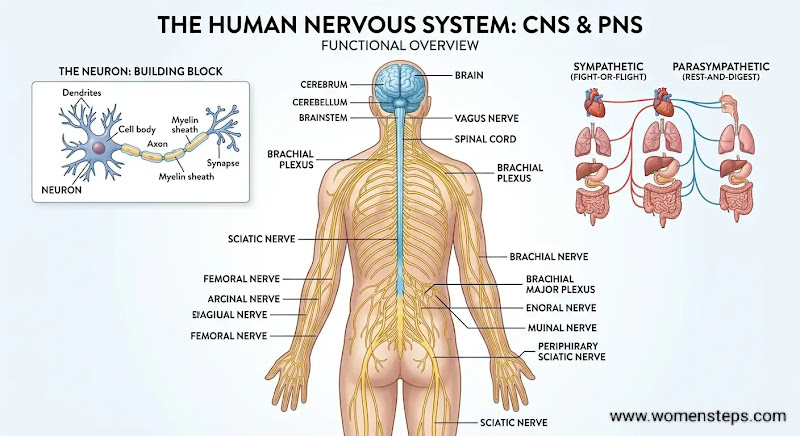
1. The 10-Minute Scientific Micro-Reset Framework
You do not need an hour-long yoga session during peak working hours to clear brain fog and lower your physiological heart rate. The core objective of this micro-break framework is to quickly shift your Autonomic Nervous System from the sympathetic (stress response) state to the parasympathetic (rest and recovery) state.
| Timeframe | Technique | Primary Physiological Goal |
|---|---|---|
| Minutes 1–3 | Box Breathing Strategy | Activates Vagus nerve, lowers blood pressure & clears acute cortisol spikes |
| Minutes 4–6 | 5-4-3-2-1 Sensory Grounding | Interrupts predictive mental stress & anchors focus in present surroundings |
| Minutes 7–10 | Ergonomic Trapezius & Jaw Release | Relieves physical tension in the neck/jaw & signals safety back to the brain |
Minutes 1–3: Box Breathing (Vagus Nerve Activation)
Popularized by peak performance strategists and clinical researchers at Cleveland Clinic, tactical box breathing is the fastest method to stimulate the vagus nerve and reduce acute anxiety.
- Inhale: Inhale deeply through your nose for 4 seconds, allowing your diaphragm to expand fully.
- Hold: Hold your breath for 4 seconds, keeping your lungs capacity expanded.
- Exhale: Exhale slowly through your mouth over 4 seconds.
- Hold: Pause for 4 seconds before the next breath cycle.
- Repeat: Complete 3 to 4 full cycles to lower blood pressure and flush out cortisol spikes.
Minutes 4–6: The 5-4-3-2-1 Sensory Grounding Method
When intense work deadlines trigger mental overwhelm, your focus drifts into predictive stress. Grounding techniques pull cognitive awareness back to the physical present.
- 5 Things You Can See: Direct attention to surrounding items (e.g., your desk surface, a succulent plant, monitor stand).
- 4 Things You Can Touch: Notice tactile textures (e.g., your cotton blazer, notebook cover, chair cushion).
- 3 Things You Can Hear: Listen to ambient frequencies (e.g., HVAC airflow, distant typing, subtle white noise).
- 2 Things You Can Smell: Notice scents (e.g., green tea aroma, subtle essential oils).
- 1 Thing You Can Taste: Focus on lingering taste cues (e.g., mint, sparkling water).
Minutes 7–10: Ergonomic Trapezius & Jaw Tension Release
Physical tension habitually accumulates in the neck, jaw, and upper trapezius muscles during long computer sessions. Releasing these muscle groups signals safety back to the brain.
- The Jaw Release: Take a deep breath in, and as you exhale, allow your lower jaw to drop completely slack, unclenching your teeth.
- Shoulder Retraction: Draw your shoulder blades backward and down, tucking them toward your back pockets.
- Lateral Neck Stretch: Gently incline your right ear toward your right shoulder for 30 seconds, then alternate to relieve monitor-induced strain.
2. Optimizing Your Workspace Environment for Executive Calm

Whether managing a remote home office or working in a corporate facility, structuring your workspace provides continuous sensory support against stress fatigue.
- Biophilic Office Design: Integrating indoor plants like Snake Plants (Sansevieria) or Pothos helps purify indoor ambient air quality and creates immediate visual soothing.
- Blue Light & Circadian Hygiene: Extended screen exposure past mid-afternoon artificially boosts cortisol. Enable warmth filters on monitors or wear blue-light blocking lenses past 4:00 PM.
- Targeted Hydration & Herbal Adaptogens: Replace late afternoon caffeine drinks with adaptogenic blends like Ashwagandha or magnesium-fortified beverages to support adrenal recovery according to Harvard Health Publishing.
Frequently Asked Questions
Q: Can I perform this 10-minute stress routine during workplace meetings?
A: Absolutely. Tactical Box Breathing and jaw unclenching are completely discreet. They function as effective stealth techniques to down-regulate your stress response during high-stakes presentations or video calls.
Q: How does sustained corporate stress impact skin health and hair density?
A: Chronic elevated cortisol activates widespread inflammatory pathways. This frequently leads to adult breakouts, collagen breakdown, and temporary hair thinning, clinically known as telogen effluvium.
Q: Are high-sugar cravings during work deadlines driven by biology?
A: Yes. Under acute stress, your adrenal glands signal a demand for rapid glucose to fuel immediate physical action. Substituting fast-acting sugars with nutrient-dense fats, like raw almonds or walnuts, stabilizes blood sugar spikes and reduces hormonal cravings.
Q: Are micro-breaks scientifically effective for burnout prevention?
A: Yes. Neuroscience studies demonstrate that short 5 to 10-minute targeted physiological pauses interrupt cumulative stress build-up, preserving cognitive focus and preventing afternoon burnout.
Editorial & Fact-Checking Policy
Fact-Checked & Medically Verified: Content on WomenSteps is evaluated against published neurobiology literature and peer-reviewed stress mitigation guidelines from official authorities, including the American Psychological Association (APA), Harvard Health Publishing, and the Cleveland Clinic.